Reading the Landscape: How Native Wildflowers Fit Into Canadian Ecosystems
Canada's wildflower flora spans dramatically different environments — the short-season tundra margins of the territories, the wet meadows of the Pacific coast, the tallgrass remnants of southern Ontario, and the open boreal understory of the Shield. Each zone supports a distinct assemblage of flowering plants adapted to local frost dates, soil pH, moisture levels, and light regimes.
Field identification relies on a combination of features: flower structure, leaf arrangement and shape, stem characteristics, and habitat context. No single feature is reliably diagnostic on its own. The following species accounts combine multiple characteristics for more confident identification.
Species Accounts
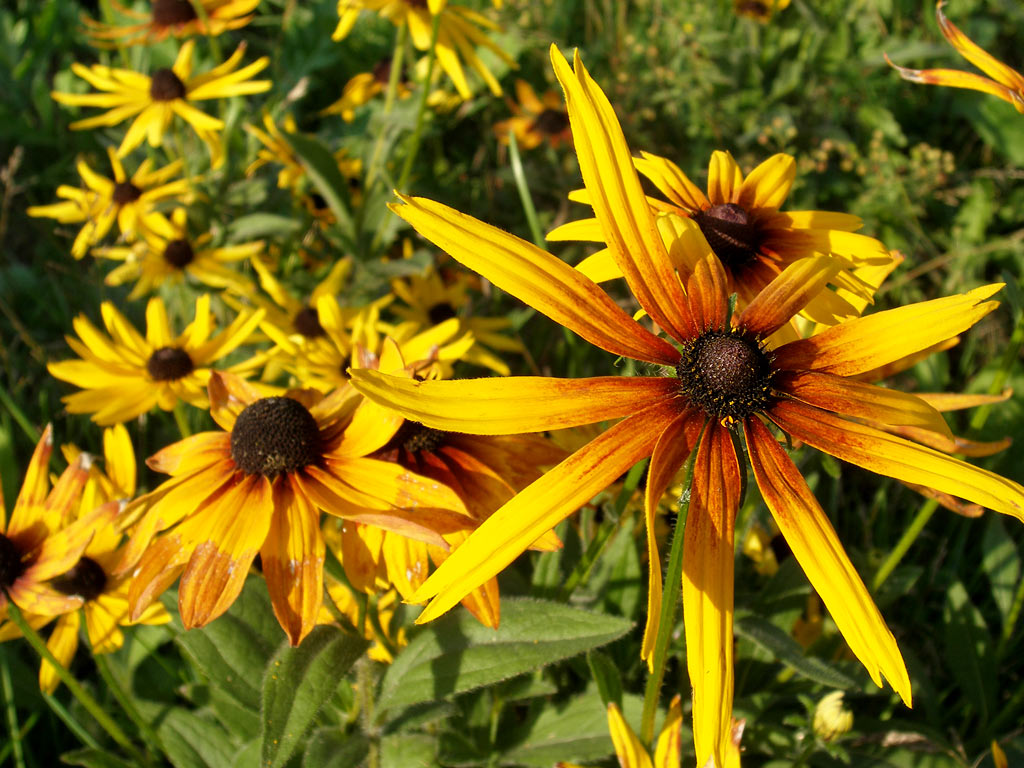
Black-eyed Susan — Rudbeckia hirta
Range: Throughout most of southern Canada, from British Columbia east to Nova Scotia; absent from the far north.
Identification: Flower heads 5–9 cm across with 10–20 yellow ray florets surrounding a domed, dark brown to purple-black central disc. Stems and leaves covered in stiff hairs. Basal leaves elliptic to lance-shaped, 5–17 cm long; stem leaves alternate and smaller. Typically 30–90 cm tall.
Bloom period: June through October, peaking in midsummer.
Habitat: Dry to mesic meadows, open woodland margins, roadsides, disturbed ground. Tolerates poor, well-drained soils. Often found alongside grasses in open habitats with full sun.
Ecological role: Visited by a wide range of native bees, including specialist Andrena mining bees. Seeds consumed by small birds, particularly goldfinches, through autumn and winter. Short-lived perennial or biennial; spreads readily from seed in disturbed areas, making it useful for restoration plantings.
Identification note
Distinguishing Rudbeckia hirta from other yellow composites
The stiff, bristly hairs on stems and leaves distinguish R. hirta from the smooth-stemmed Heliopsis helianthoides (Ox-eye sunflower), which also has yellow ray florets. Rudbeckia disc florets are consistently dark brown to black; Heliopsis disc florets are yellow to yellowish-brown.
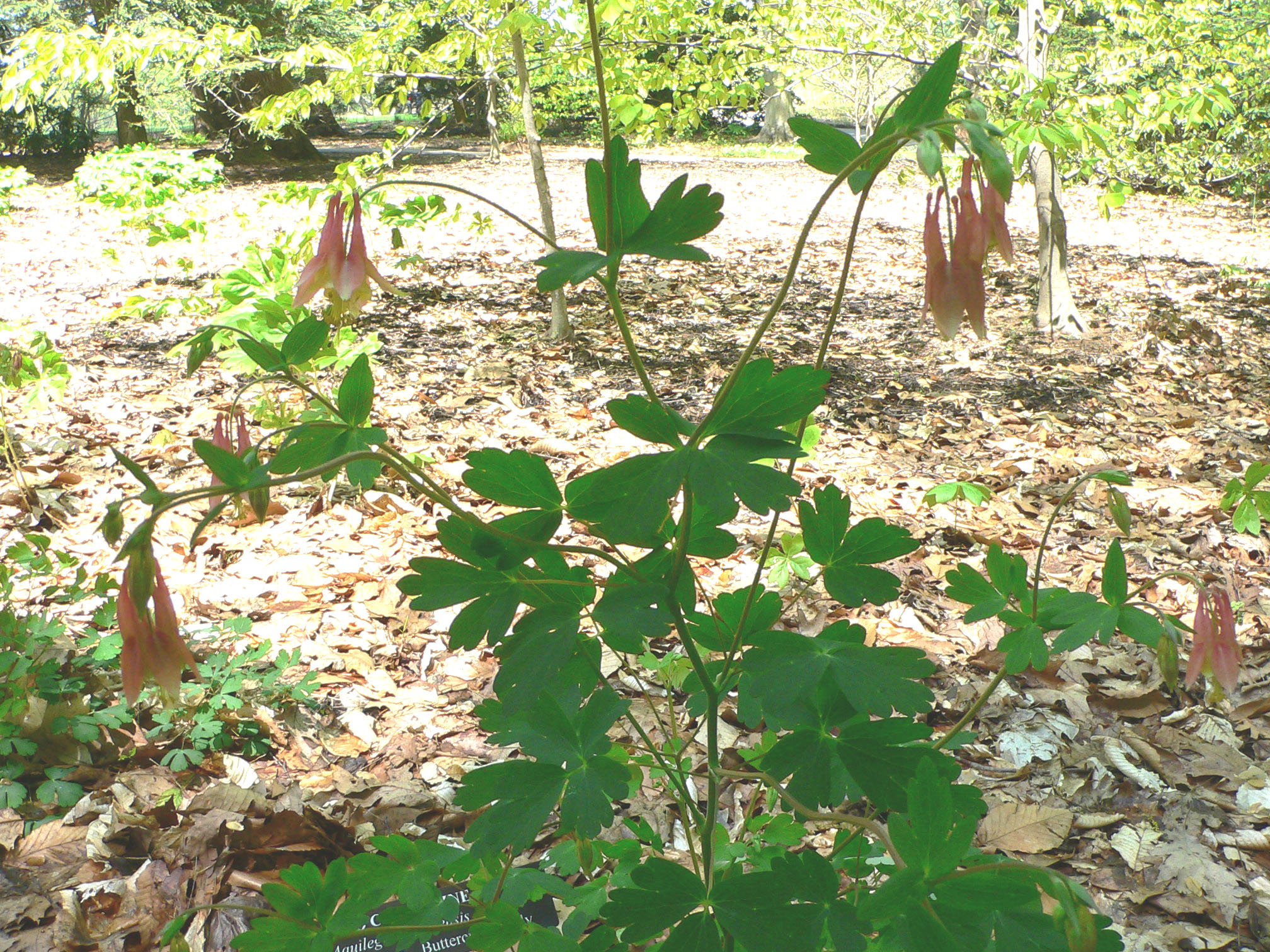
Canada Columbine — Aquilegia canadensis
Range: Eastern Canada from Nova Scotia to Manitoba; scattered populations in Saskatchewan.
Identification: Nodding red and yellow flowers with five long backward-pointing hollow spurs — a feature immediately diagnostic in the field. Petals yellow; sepals red. Leaves compound, leaflets lobed with three rounded segments. Plant 30–80 cm tall.
Bloom period: April through June, among the earliest showy wildflowers in eastern woodlands.
Habitat: Rocky outcrops, open deciduous woodland, woodland edges on well-drained to dry soils. Often found on limestone outcrops or talus slopes. Tolerates partial shade but flowers best with some direct sun.
Ecological role: The long nectar spurs are adapted to long-tongued hummingbirds — Ruby-throated Hummingbirds are the primary pollinator in Canada. Bumblebees sometimes access nectar by piercing the spur base. Seeds have an elaiosome (fatty body) attractive to ants, which disperse them short distances.
New England Aster — Symphyotrichum novae-angliae
Range: Ontario, Quebec, and the Maritime provinces; naturalized populations further west.
Identification: One of the showiest native asters. Ray florets deep violet-purple to occasionally pink, 40–100 per head, surrounding a yellow disc that turns reddish as florets mature. Leaves lance-shaped, 5–12 cm long, clasping the stem at the base (auriculate). Stems stout, 60–180 cm tall, covered in sticky-glandular hairs in the upper portions. Multiple flower heads per stem.
Bloom period: Late August through October — a key late-season nectar source.
Habitat: Moist to wet meadows, floodplain margins, roadside ditches, disturbed ground. Tolerates seasonal flooding. Found in full sun to partial shade.
Ecological role: Among the most ecologically significant autumn wildflowers in eastern Canada. Supports numerous specialist bee species (genus Andrena and Lasioglossum). Critical fuel stop for migrating Monarch butterflies in September. Seeds eaten by sparrows and finches in autumn and early winter.

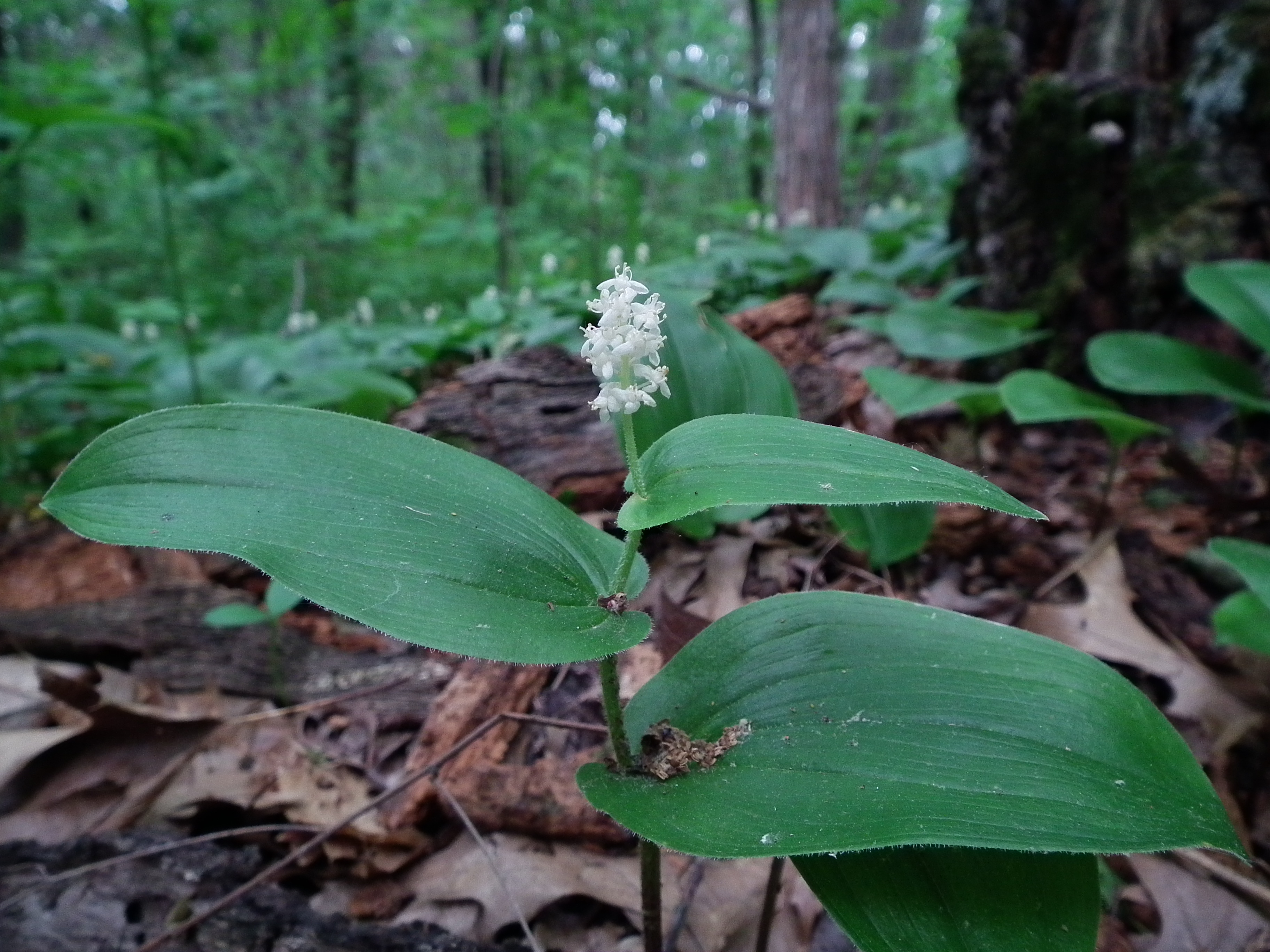
Wild Lily-of-the-Valley — Maianthemum canadense
Range: Widespread across boreal and mixed-forest Canada, from Newfoundland to British Columbia and north into the territories. One of the most broadly distributed native forest herbs.
Identification: Small plant, typically 8–20 cm tall. Leaves two or occasionally three, alternate, broadly oval to heart-shaped at the base, 3–8 cm long, with parallel veins and a slightly shiny upper surface. Flower clusters a terminal raceme of small white four-petalled flowers. Berries ripen from speckled green-white to red in late summer.
Bloom period: May through June.
Habitat: Shaded to partially shaded boreal and mixed-forest floor. Spreads vegetatively by rhizome to form colonies. Tolerates acidic, well-drained to moderately moist soils. Often the dominant ground-cover species in undisturbed boreal stands.
Ecological role: Provides ground-layer structure in forest understories. Berries eaten by thrushes, robins, and small mammals. A reliable indicator of relatively undisturbed forest floor conditions.
Bloom Season Reference
| Species | Common Name | Bloom Period | Primary Habitat |
|---|---|---|---|
| Aquilegia canadensis | Canada Columbine | April – June | Rocky woodland, outcrops |
| Maianthemum canadense | Wild Lily-of-the-Valley | May – June | Boreal forest understory |
| Rudbeckia hirta | Black-eyed Susan | June – October | Dry meadows, open ground |
| Symphyotrichum novae-angliae | New England Aster | August – October | Moist meadows, roadsides |
Planting Considerations
When introducing native wildflowers to a garden setting, source material matters. Locally-collected seed or nursery stock propagated from regional genotypes maintains the genetic diversity and local adaptations present in wild populations. Plants sourced from distant provenances may be phenologically mismatched with local pollinators — blooming earlier or later than the insects that depend on them.
Provincial programs such as the Ontario Native Plants initiative and resources from the Canadian Wildlife Federation provide guidance on sourcing regionally appropriate stock.
Avoid introducing cultivars or garden selections into areas adjacent to natural habitats. Selected forms — particularly double-flowered or colour-altered cultivars — may cross with wild populations and dilute local genetic integrity, or may be less accessible to specialist pollinators than the straight species.